

1.1 Current Status of Regional Power Grid Interconnection
1.1.1 Current Status of Power Grid Interconnection Between Vietnam and Neighboring Countries
1.1.1.1 Interconnection with China
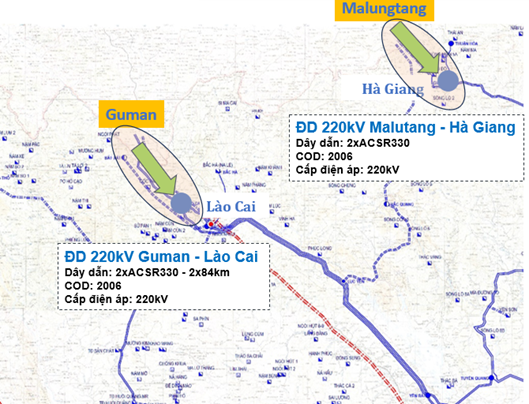
Vietnam imports approximately 550 MW of electricity from China through 220 kV and 110 kV transmission lines such as Malutang – Ha Giang, Guman – Lao Cai, and Hekou – Lao Cai. The total imported electricity in 2022 reached about 0.66 billion kWh.
1.1.1.2 Interconnection with Laos
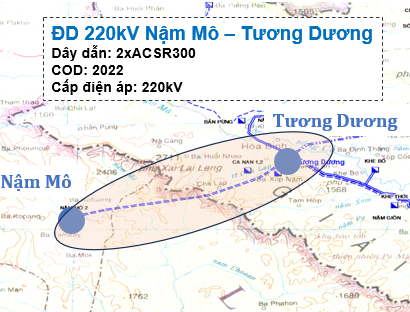
Vietnam imports electricity from Laos via the 220 kV Xekaman 3 – Thanh My and Xekaman 1 – Pleiku transmission lines, with a total capacity of 572 MW. The 220 kV Nam Mo – Tuong Duong line was also energized in 2022 to supplement power imports from Laos.
1.1.1.3 Interconnection with Cambodia
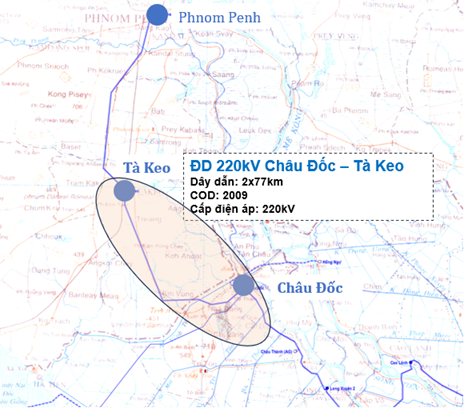
Vietnam exports electricity to Cambodia through the 220 kV Chau Doc – Takeo transmission line, with a maximum capacity of 250 MW and an annual supply of around 1 billion kWh.
1.1.2 Regional Power Grid Interconnection
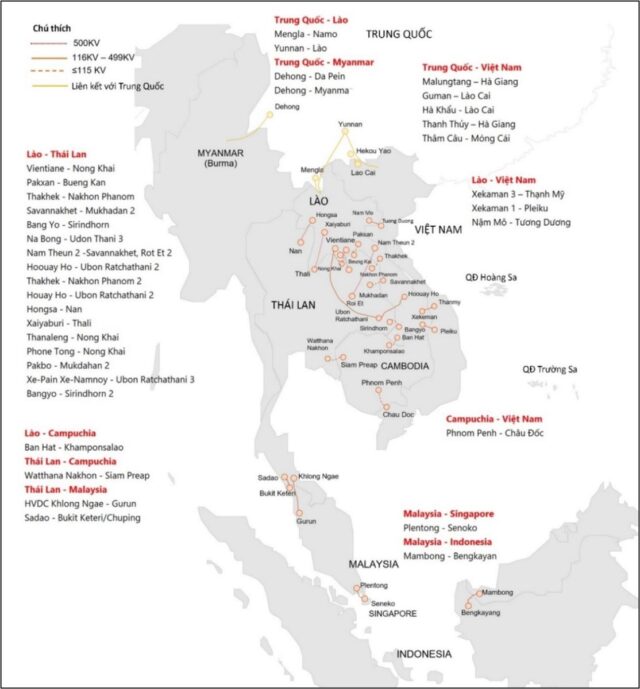
Power grid interconnection within the Greater Mekong Subregion and the ASEAN Power Grid (APG) plays a strategic role in enhancing energy security. In 2022, a notable milestone was the LTMS-PIP project (Laos – Thailand – Malaysia – Singapore), enabling cross-border electricity trade of 100 MW and promoting regional cooperation. Various other bilateral interconnections are also in operation, contributing to optimized regional power generation.
1.2 Development Directions and Cooperation for the ASEAN Power Grid (APG)
1.2.1 Demand and Potential for ASEAN Grid Interconnection
ASEAN countries possess uneven renewable energy resources; therefore, regional power interconnection enables resource sharing, reduces investment costs, and strengthens energy security. Grid integration could reduce up to 154 GW of installed capacity and save around USD 1.87 billion. Thailand and Singapore are major electricity importers, while Laos, Cambodia, Myanmar, and Brunei can export more than 20% of their total generation. The ASEAN grid also supports the integration of renewable energy—optimizing wind, solar, and hydropower—while using coal and gas as balancing sources when renewable output is low.
1.2.2 ASEAN Interconnection Demand and Potential for Vietnam
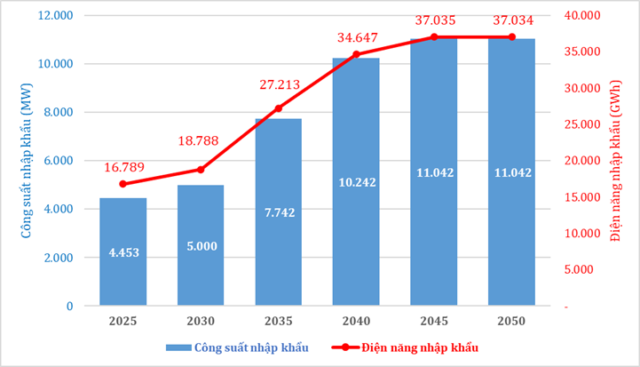
According to Vietnam’s Power Development Plan VIII, the country will expand 220–500 kV interconnections with neighboring countries, particularly focusing on electricity imports from Laos. Northern Vietnam lacks renewable energy resources and is projected to require 5,000–8,000 MW of imports by 2030 and 11,000 MW by 2050. The Central and Southwestern regions have favorable geography and renewable energy potential, offering opportunities for interconnection with Thailand, Cambodia, Myanmar, Malaysia, and Singapore. Developing HVDC links or back-to-back stations is essential to support green energy transition and enhance regional energy security.
1.3 Key Studies and Proposed Solutions by PECC2
1.3.1 Study on the ASEAN Green Power Grid (AGPG)
1.3.1.1 Rationale for Developing the AGPG
The AGPG is essential for meeting COP26–27 commitments, leveraging ASEAN’s uneven renewable energy potential, reducing dependence on fossil fuels, and enabling businesses to comply with carbon taxation requirements. Vietnam, Laos, and Cambodia hold a strategic central position with abundant renewable energy resources, making them ideal for forming a regional green power trading corridor.
1.3.1.2 Proposed Interconnections for Green Power Trading
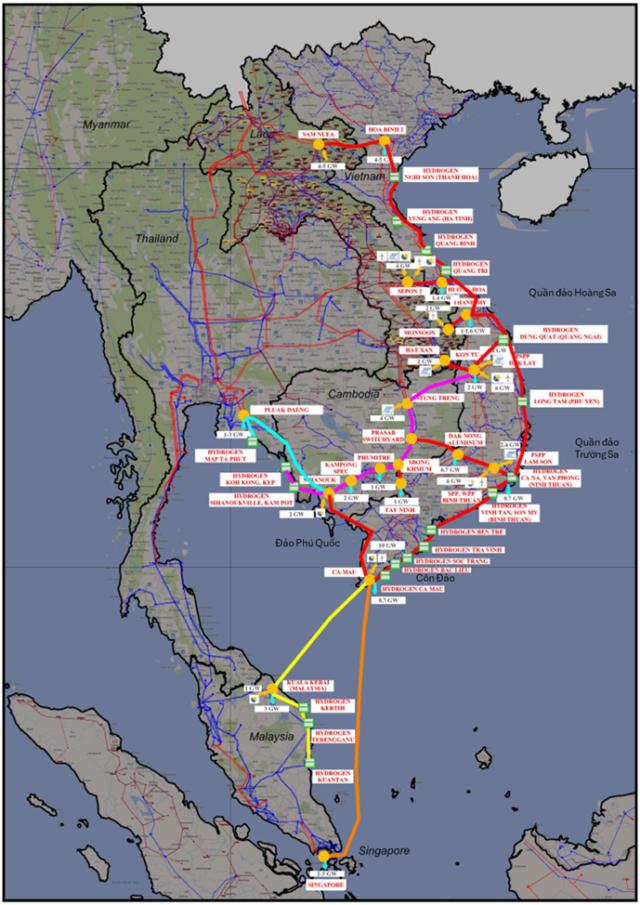
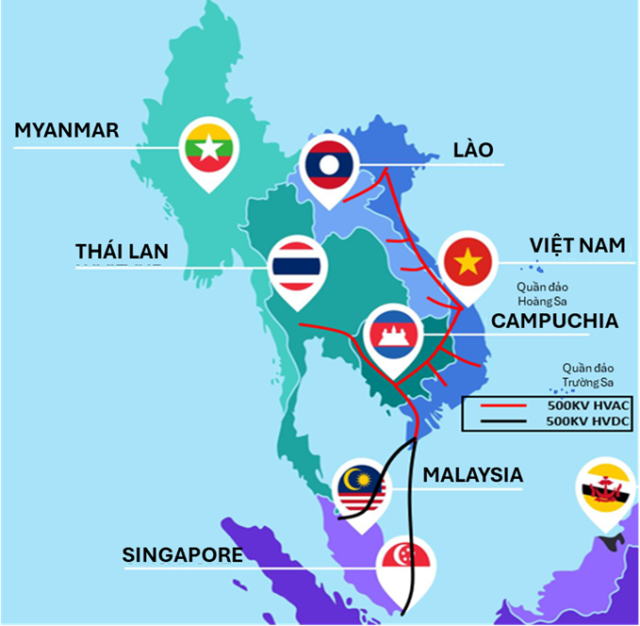
The study proposes developing 500 kV HVAC transmission lines connecting Laos – Vietnam – Cambodia – Thailand, and utilizing subsea HVDC cables for routes from Ca Mau to Singapore/Malaysia to support green power exports.
1.3.1.3 Transmission Technologies for the AGPG
The AGPG would operate as a regional 500 kV HVAC corridor without interfering with national power grids. Long-distance subsea routes would employ HVDC technology.
1.3.1.4–1.3.1.6 Models and Recommendations
Recommendations include establishing national transmission companies, creating an ASEAN green electricity market, developing an AGPG Control Center in Ho Chi Minh City, promoting investment cooperation, standardizing REC mechanisms, and expanding interconnections beyond 2035.
1.3.2 Study on Transmission Grid Interconnection for Power Imports from Laos
1.3.2.1–1.3.2.3 Demand and Potential for Power Imports from Laos
Northern Vietnam faces severe power shortages, while Laos has a surplus of more than 19,500 MW of hydropower and renewable energy. Vietnam could import 8–10 GW of electricity with the addition of new 500 kV transmission routes.
1.3.2.4 Proposed Project List
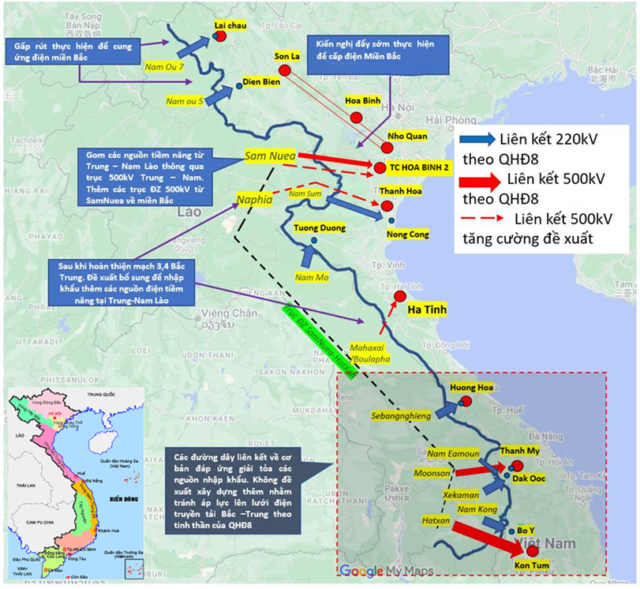
The study proposes accelerating 220–500 kV projects from Nam Ou and Sam Neua, along with additional lines such as Mahaxai – Ha Tinh and Naphia – Thanh Hoa to enhance import capacity.
 EN
EN  VI
VI